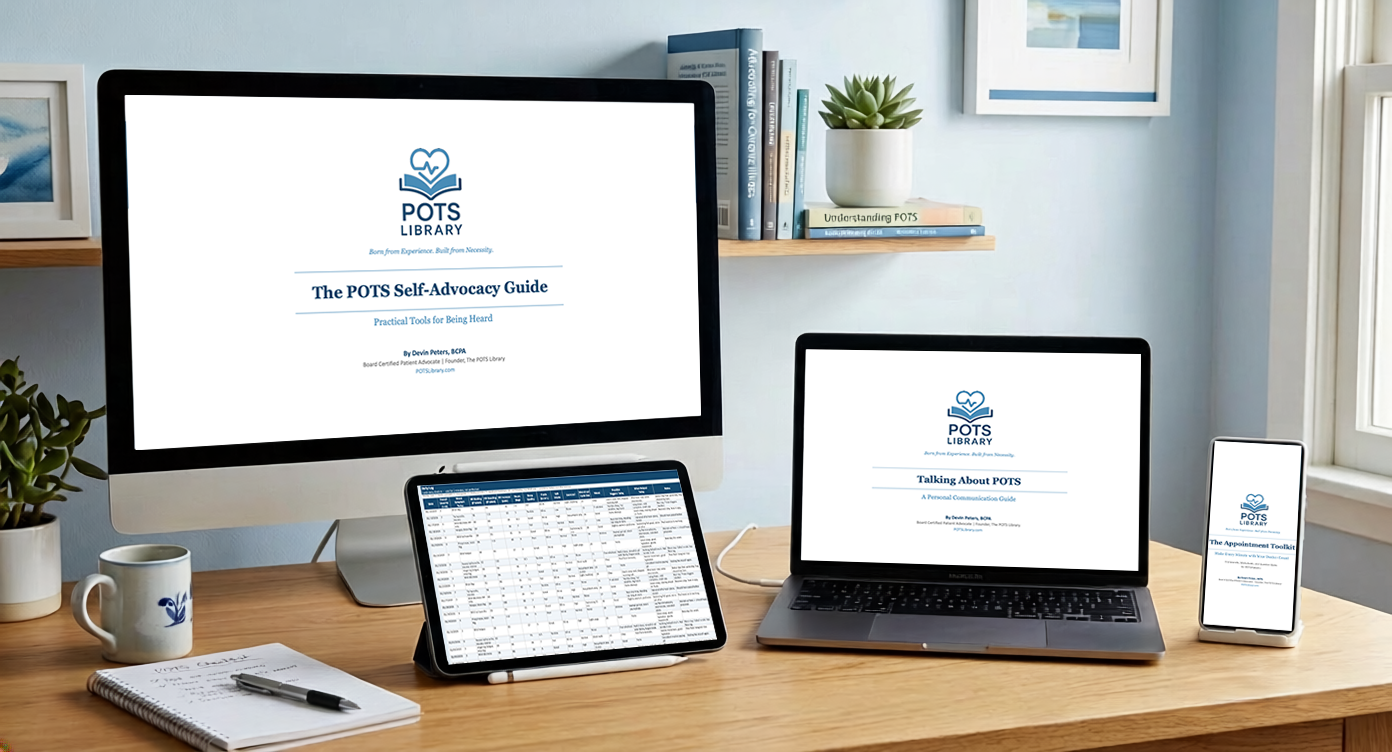
Every tool currently available from The POTS Library — medical advocacy, appointment preparation, personal communication, and support person guidance — in one collection.
Includes:
The POTS Self-Advocacy Guide
The Appointment Toolkit
Talking About POTS
The Support Person Guide
Advocacy Dismissal Log (Google Sheet)
Appointment Toolkit Tracker (Google Sheet)
At $59.99, this collection costs less than a single specialist co-pay and covers every communication challenge that tends to come up in the first year of navigating POTS.
Instant download — PDF guides + Google Sheets links. Created by Devin Peters, BCPA. These products provide communication tools and frameworks. They do not constitute medical advice or guarantee specific outcomes.
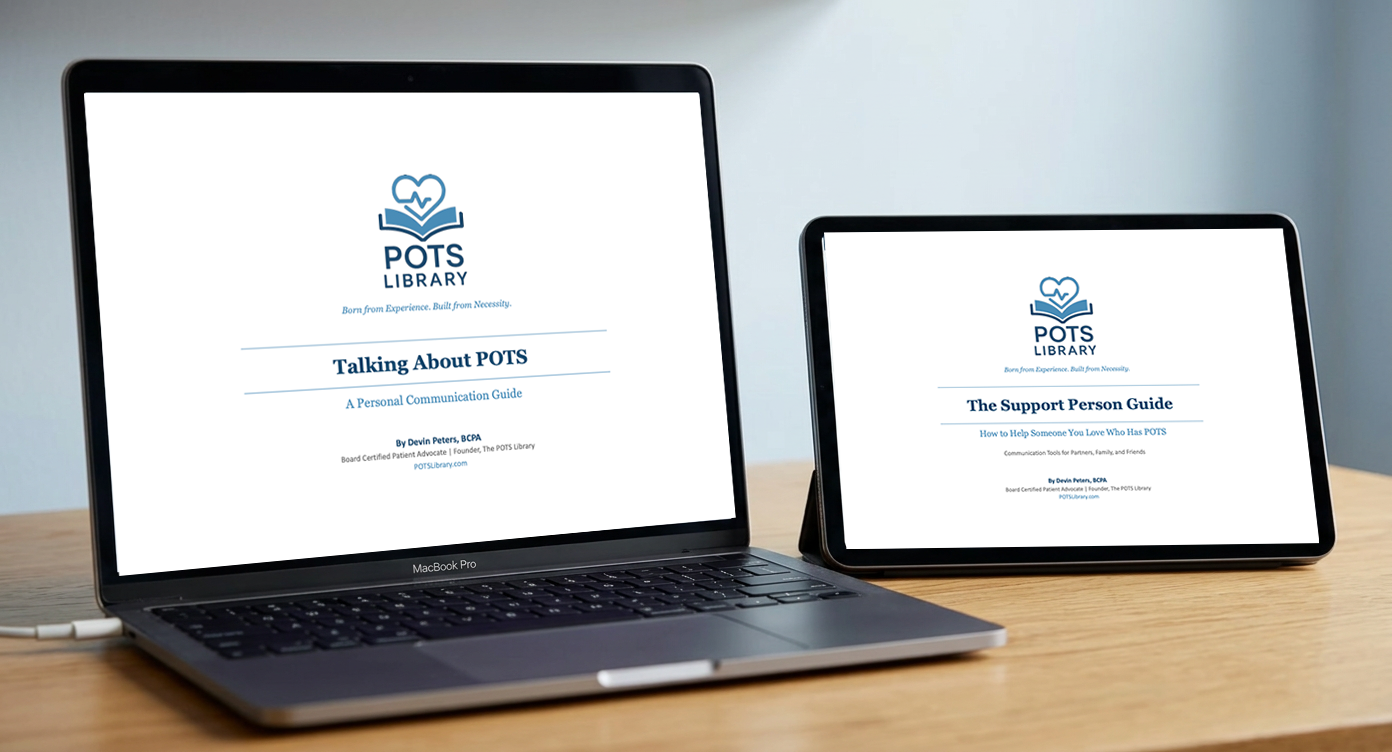
Talking About POTS and The Support Person Guide cover both sides of the same conversation — you finding the words for your experience, and the people around you understanding what those words mean. They work independently, but they work better together.
Consider sharing The Support Person Guide directly with a partner, family member, or friend. It’s written for them.
Instant download — PDF guides. Created by Devin Peters, BCPA. These products provide communication tools and frameworks. They do not constitute medical advice or guarantee specific outcomes.
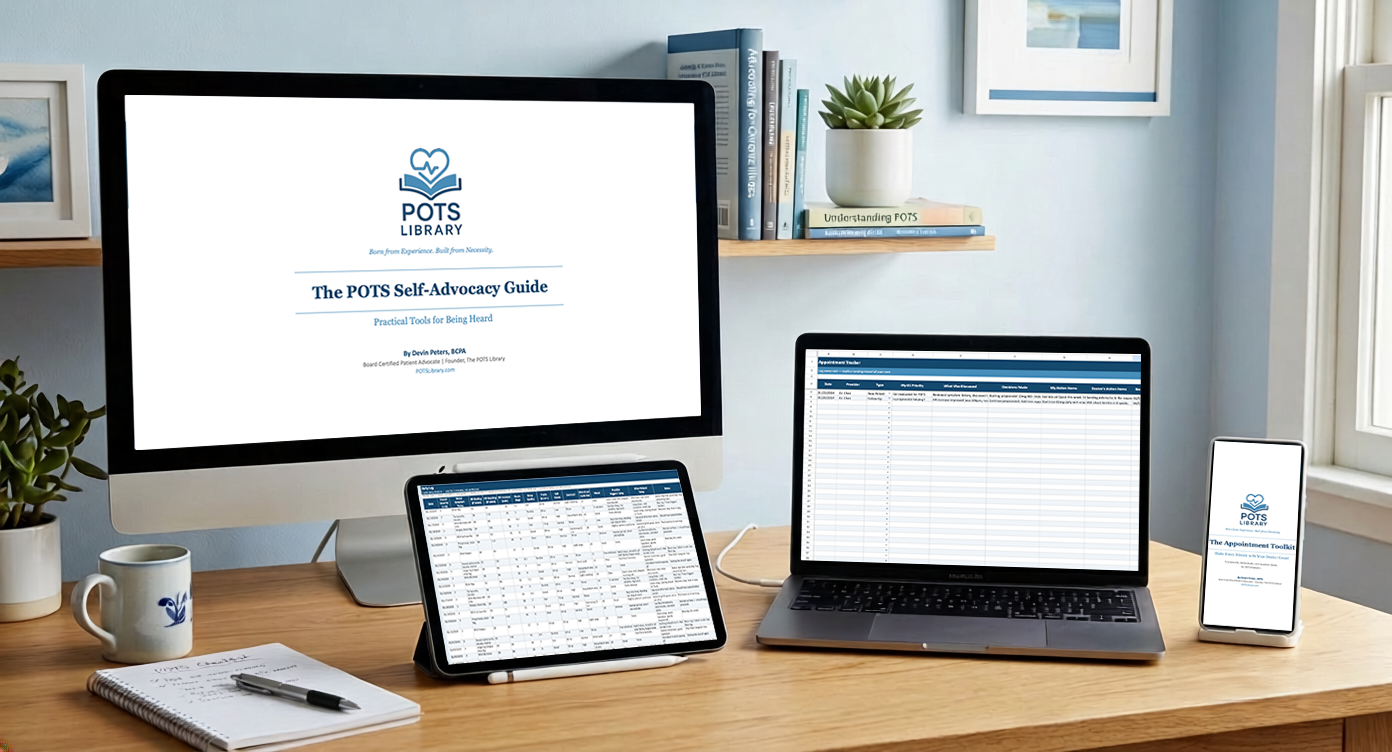
The Self-Advocacy Guide and the Appointment Toolkit cover both sides of the same challenge: knowing what to say, and being prepared to say it. The Guide gives you the communication frameworks and scripts. The Toolkit gives you the structure to get ready before you walk in the door.
Both Google Sheet tools — the Advocacy Dismissal Log and the Appointment Tracker — are included.
Instant download — PDF guides + Google Sheets links. Created by Devin Peters, BCPA. These products provide communication tools and frameworks. They do not constitute medical advice or guarantee specific outcomes.
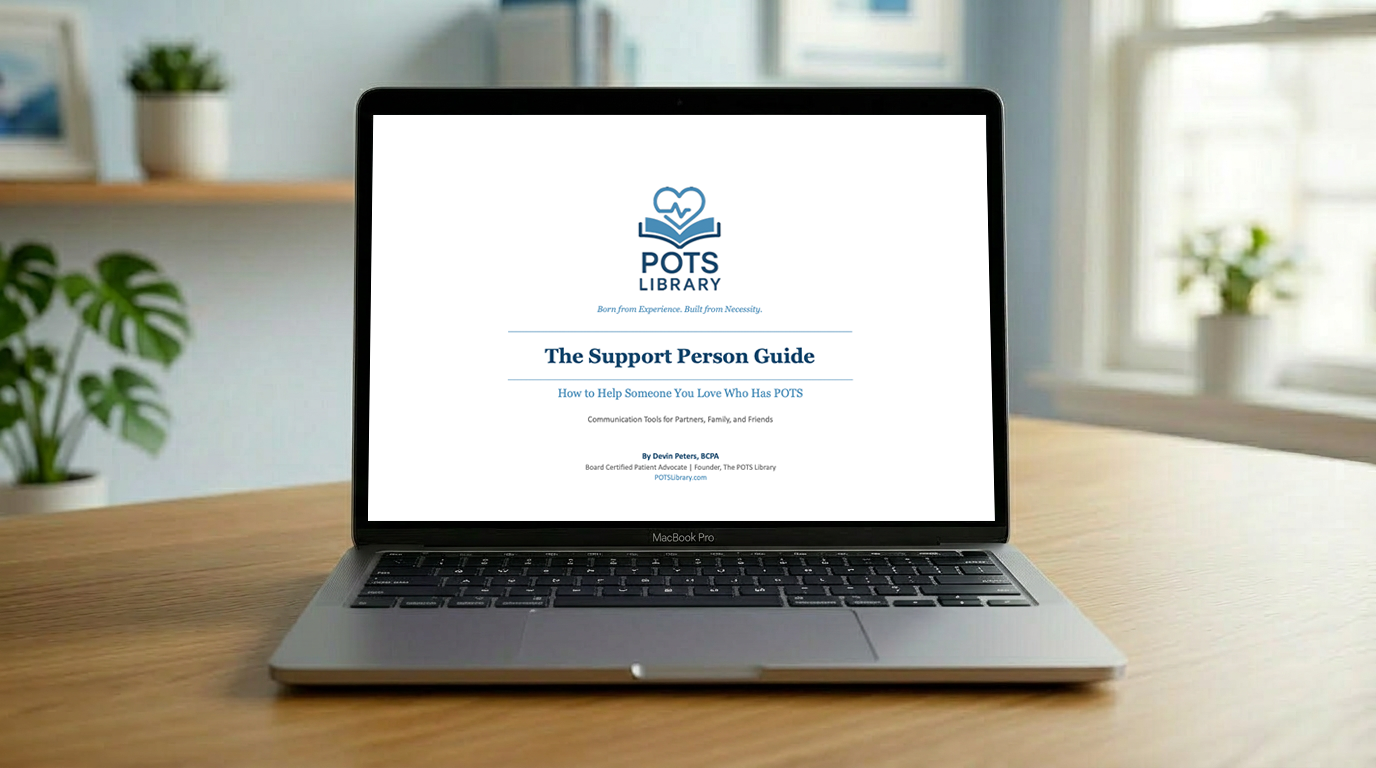
Written for the support person — not the patient.
If someone you care about has POTS, you probably want to help. You might not always know how. This guide is written directly to you — explaining what POTS actually feels like day to day, what kinds of support tend to help, and what to do when things get hard.
Inside this guide:
A plain-language explanation of what POTS is and why symptoms vary so much
What daily life with POTS actually looks like — the parts that are hard to see from the outside
How to offer support without overstepping or taking over
What to do (and what to avoid) during a flare
Scripts for difficult conversations: when you’re frustrated, when you want to help but don’t know how, when something has shifted in the relationship
How to take care of yourself while supporting someone with a chronic condition
The person in your life may have shared this with you, or you may have found it yourself. Either way, you’re here — and that matters.
Instant download — PDF guide. Created by Devin Peters, BCPA — Board Certified Patient Advocate living with POTS. This product provides communication tools and frameworks. It does not constitute medical advice or guarantee specific outcomes.
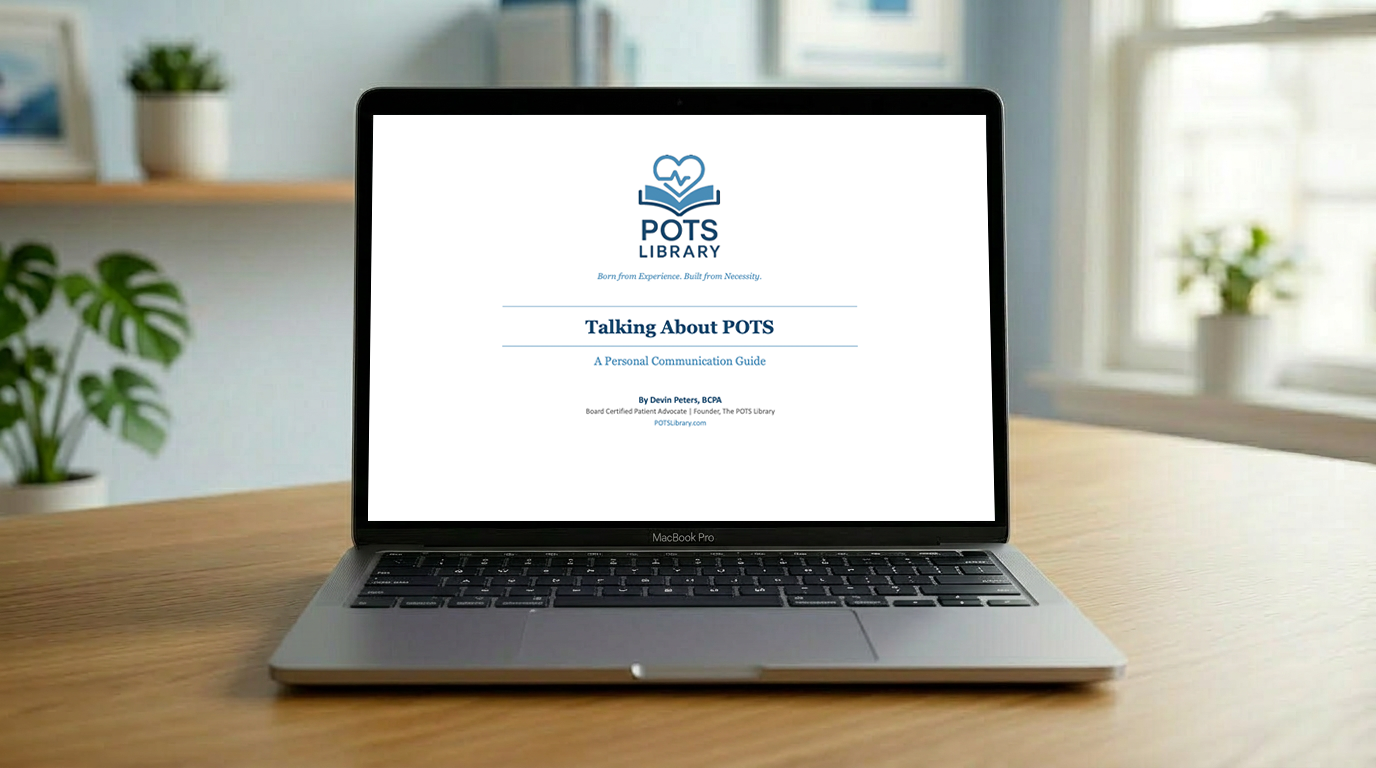
Explaining POTS to people outside the medical system — family, friends, coworkers, anyone who asks — is its own kind of exhausting. Too much and you’re overwhelmed. Too little and they don’t get it. This guide helps you find the words for the conversations that keep coming up, so you’re not starting from scratch every time.
Inside this guide:
Scripts for explaining POTS to family members, close friends, and new people in your life
Short explanations for different contexts — when you have five minutes and when you have thirty seconds
Language for medical appointments when you need to explain how POTS affects you personally
How to handle common responses: skepticism, over-concern, minimizing, unsolicited advice
Scripts for when you don’t want to explain at all — and that’s okay too
Guidance for disclosing to employers and in social situations
You don’t owe anyone a full explanation. But having the words ready makes it easier to decide when you want to give one.
Instant download — PDF guide. Created by Devin Peters, BCPA — Board Certified Patient Advocate living with POTS. This product provides communication tools and frameworks. It does not constitute medical advice or guarantee specific outcomes.
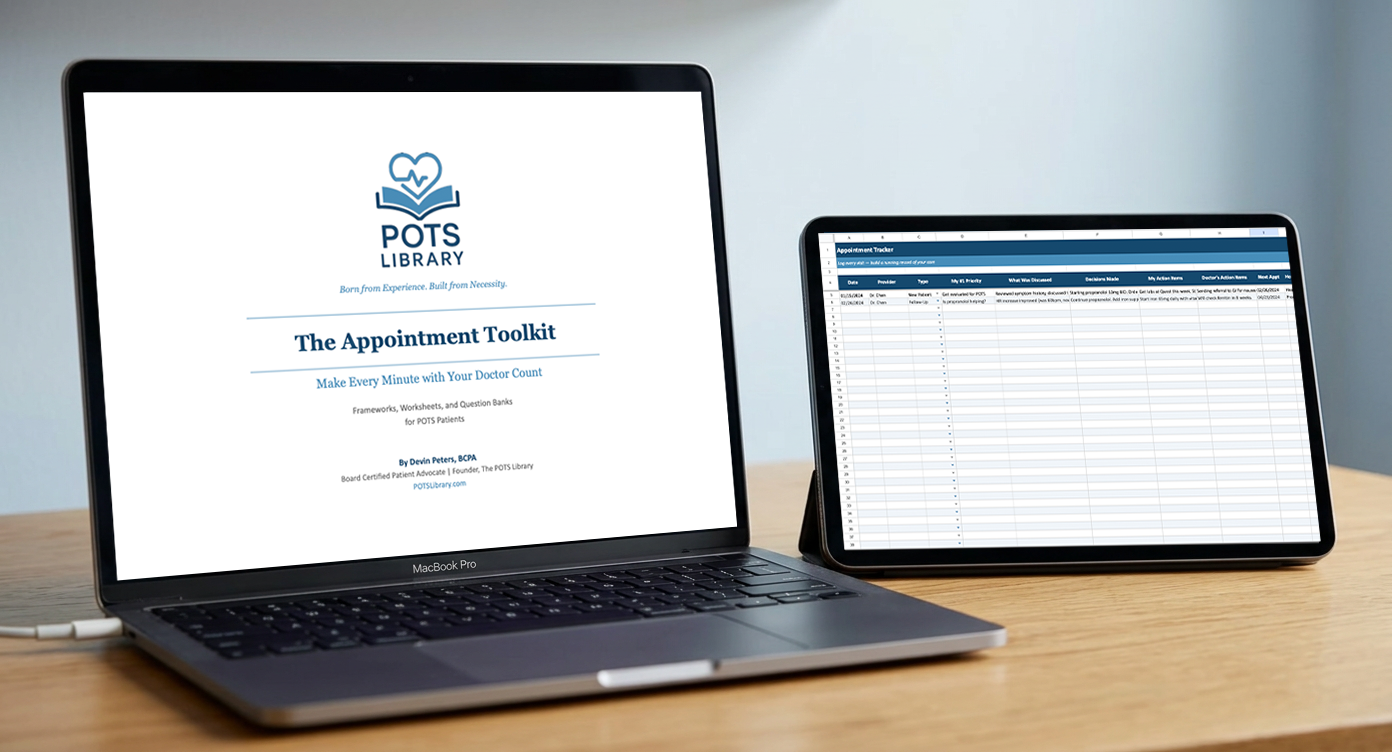
Fifteen minutes goes fast. By the time you remember everything you meant to say, you’re already in the parking lot. This toolkit helps you walk into any appointment knowing exactly what you want to cover — and walk out with a clear record of what actually happened.
Inside this toolkit:
Pre-appointment worksheet: organize your symptoms, concerns, and goals before you arrive
The 5-Minute Story Framework: a structure for presenting your case concisely when time is limited
Question banks organized by appointment type — new provider, specialist visit, follow-up, ER
Post-appointment notes template: capture decisions, next steps, and what was said while it’s fresh
Appointment Toolkit Tracker (Google Sheet) — log appointments over time, track follow-ups, and spot patterns across providers
Works as a standalone tool. Even more effective paired with the Self-Advocacy Guide.
Instant download — PDF guide + Google Sheets link. Created by Devin Peters, BCPA — Board Certified Patient Advocate living with POTS. This product provides communication tools and frameworks. It does not constitute medical advice or guarantee specific outcomes.
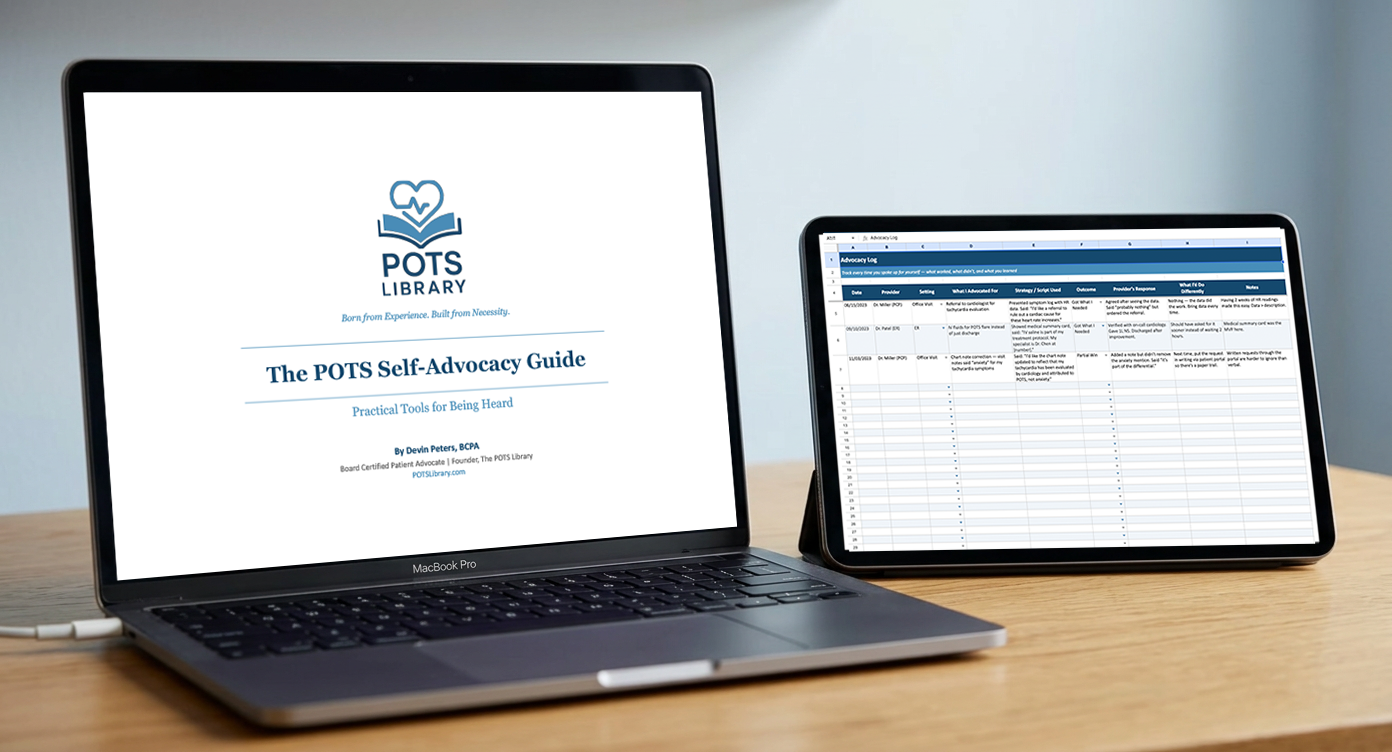
You've done the research. You know your body. And you've still walked out of appointments feeling unheard, dismissed, or talked over. This guide was built for exactly that — the gap between knowing something is wrong and getting a provider to take it seriously.
Inside this guide:
BCPA-informed communication scripts for medical appointments
Power phrases that reframe conversations without escalating them
An appointment preparation framework so you know what to say before you're in the room
Documentation strategies for presenting symptoms in a way providers respond to
Scripts for specific situations: being dismissed, being told it's anxiety, requesting a referral, pushing back without burning the relationship
Honest guidance for what to do when advocacy still doesn't work
Advocacy Dismissal Log (Google Sheet) — a structured tool for tracking dismissals, patterns, and outcomes over time
This guide doesn't promise that every appointment will go well. It gives you a better framework for the ones that don't.
Instant download — PDF guide + Google Sheets link. Created by Devin Peters, BCPA — Board Certified Patient Advocate living with POTS. This product provides communication tools and frameworks. It does not constitute medical advice or guarantee specific outcomes.
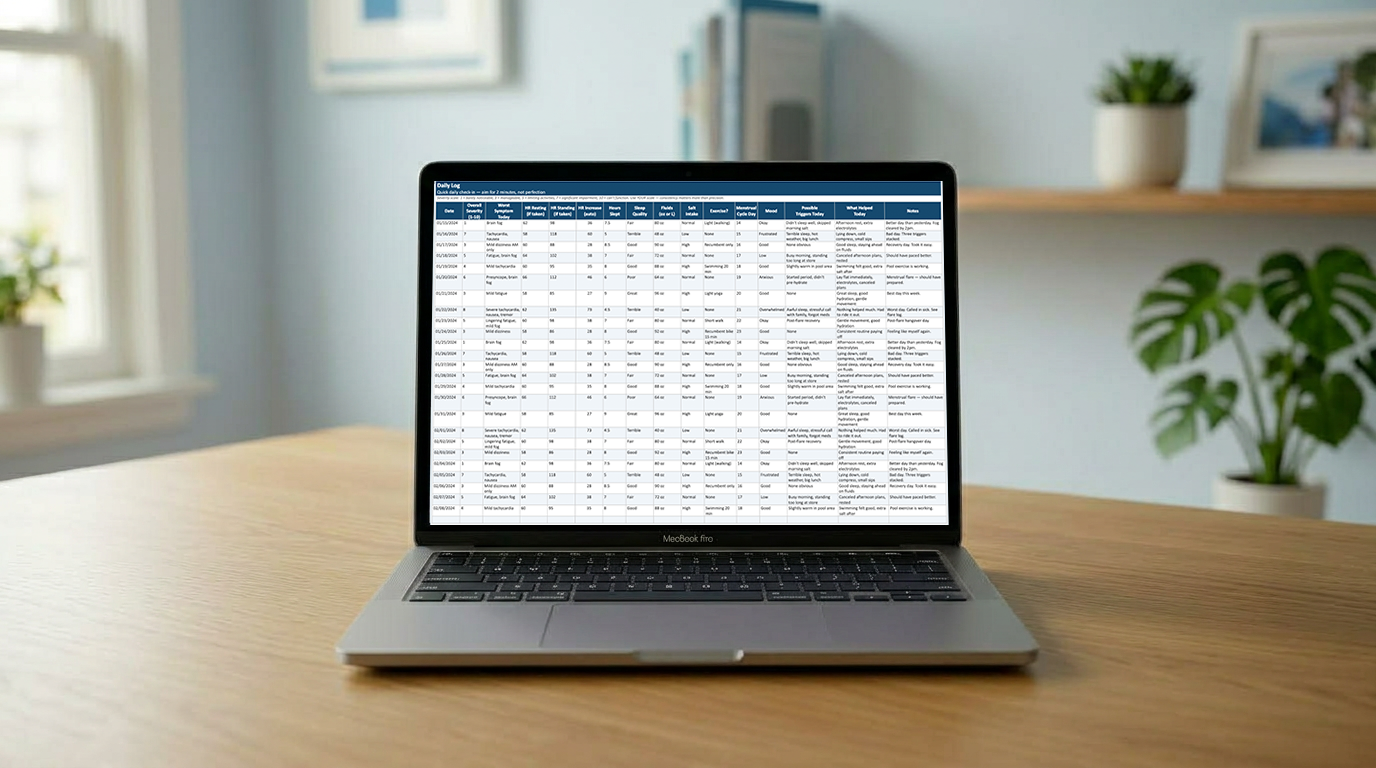
You know flares happen. What’s harder is explaining the pattern — what triggered it, how long it lasted, what helped. This Google Sheets tracker makes it easy to log symptoms over time so you can actually show a provider what’s been going on, not just try to remember it in the exam room.
Inside this free resource:
Google Sheets tracker (you make your own copy — no account needed)
Daily symptom and severity logging
Fields for tracking potential triggers, interventions, and notes
Designed to be used consistently, not just during bad stretches
This is the same quality and format as our paid spreadsheet tools. Because free things should actually be useful.
Free download. Created by Devin Peters, BCPA — Board Certified Patient Advocate living with POTS. This resource provides educational information only. It does not constitute medical advice or replace the guidance of a qualified healthcare provider.
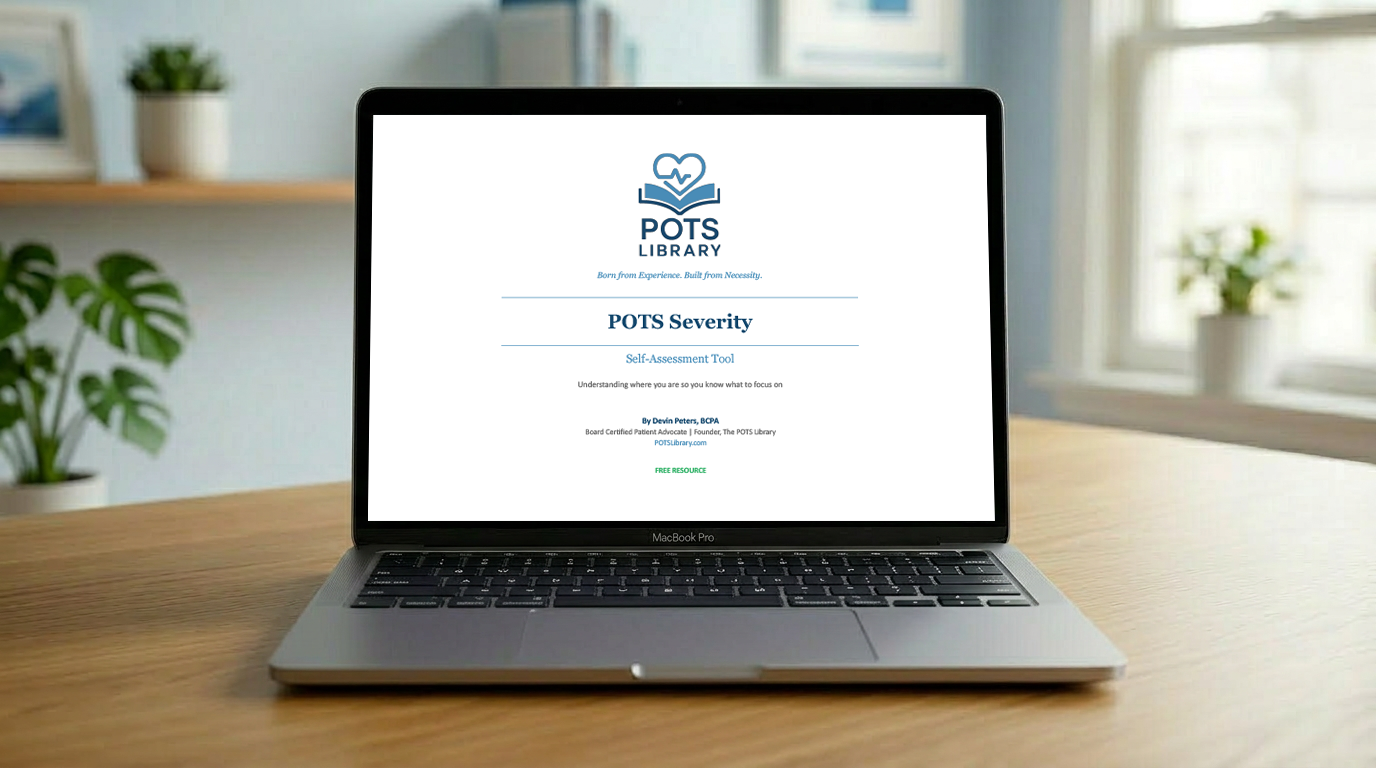
You have a diagnosis. What you might not have is a clear way to describe how POTS is actually affecting your daily life — to your doctors, your care team, or yourself. This scored self-assessment gives you a framework for understanding your current severity level and figuring out what to focus on next.
Inside this free resource:
Scored self-assessment across key functional areas
Severity level breakdown with plain-language explanations
Next-step guidance based on your results
This isn’t a clinical tool. It’s a way to put language around what you’re experiencing so you can communicate it more clearly.
Free download. Created by Devin Peters, BCPA — Board Certified Patient Advocate living with POTS. This resource provides educational information only. It does not constitute medical advice or replace the guidance of a qualified healthcare provider.
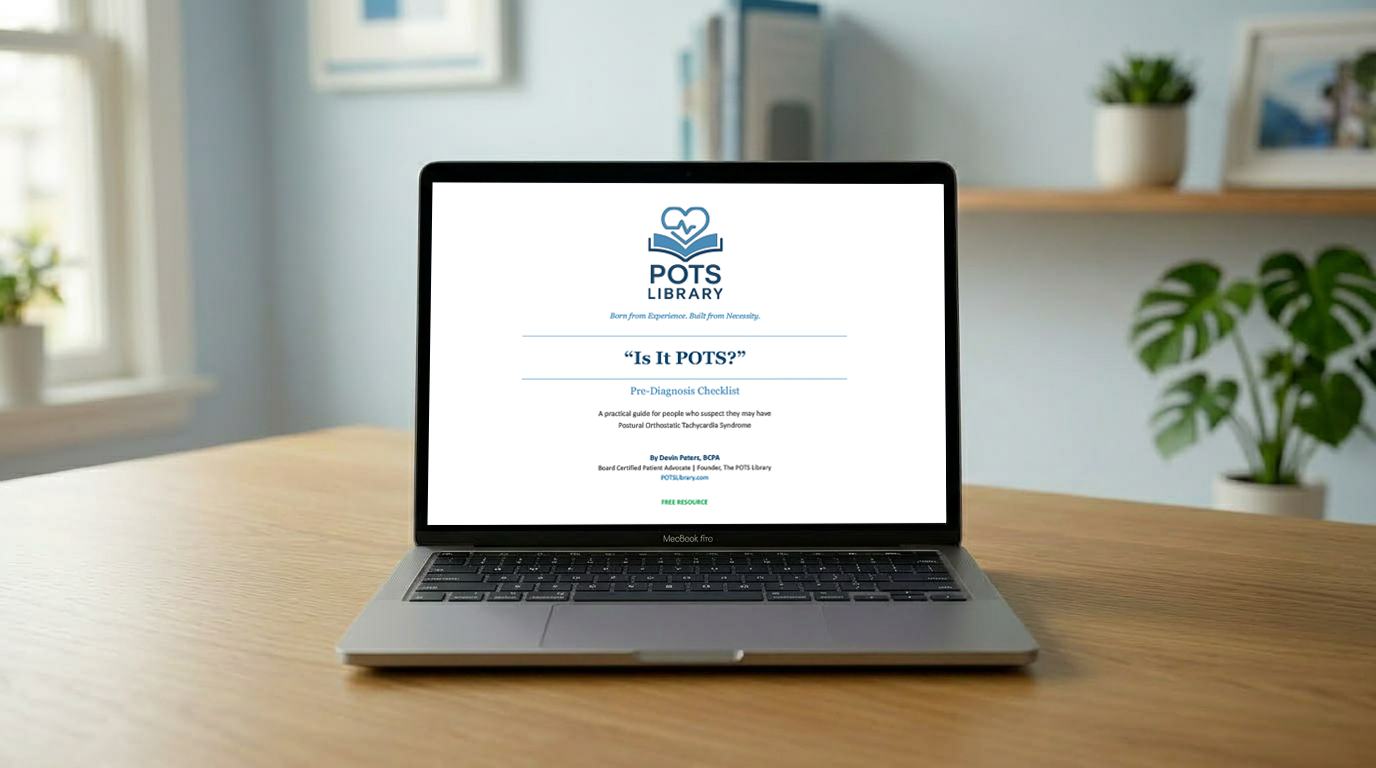
Something feels wrong, but you don’t have the words for it yet — and you’re not sure a doctor will take you seriously without them. This checklist helps you organize what’s happening before your next appointment so you can walk in prepared.
Inside this free resource:
Symptom tracking checklist covering the most common POTS presentations
Step-by-step instructions for the home orthostatic test (a simple DIY tilt assessment you can do before seeing a specialist)
Prepared questions to bring to your doctor
This is a starting point, not a diagnosis. Use it to get organized and get the conversation started.
Free download. Created by Devin Peters, BCPA — Board Certified Patient Advocate living with POTS. This resource provides educational information only. It does not constitute medical advice or replace the guidance of a qualified healthcare provider.
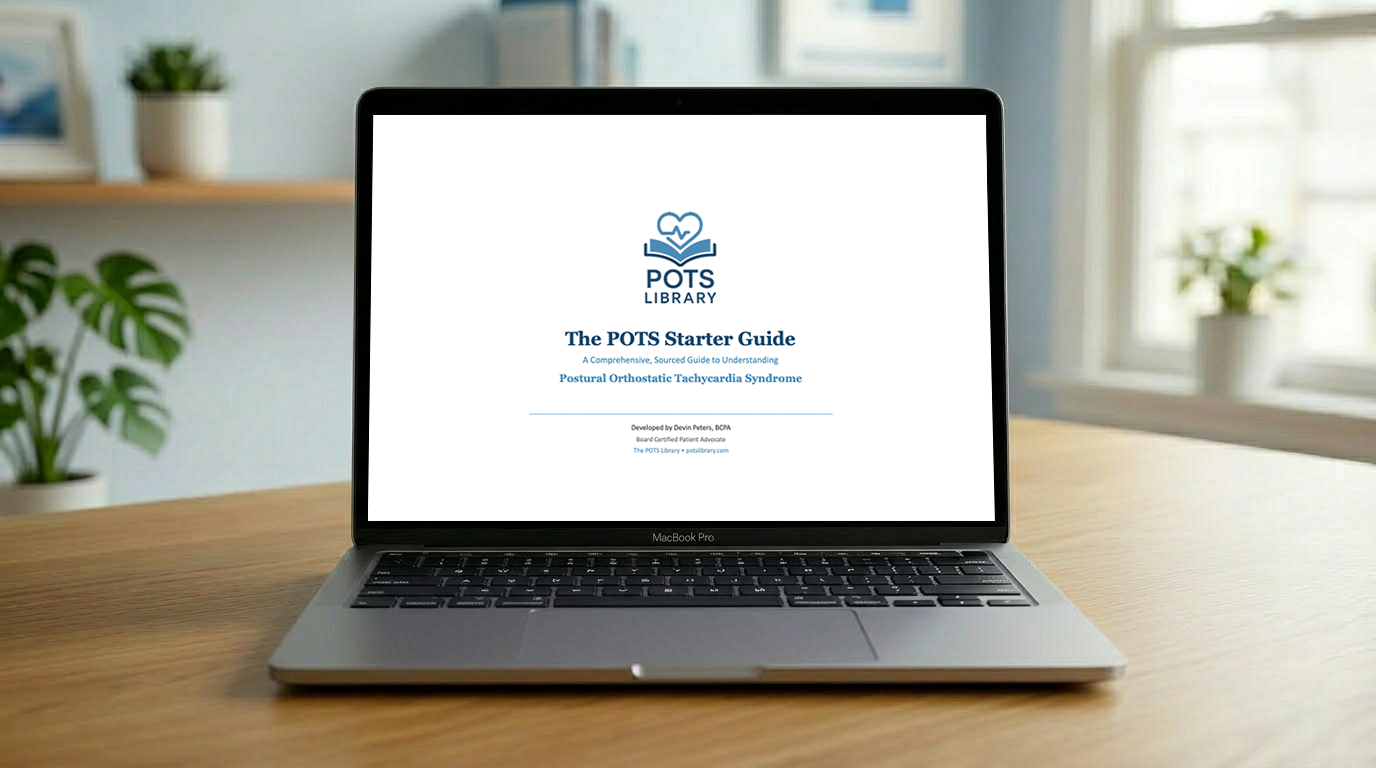
When you’re newly diagnosed — or still trying to get diagnosed — it’s easy to spend hours searching and still feel like you’re missing the full picture. The POTS Starter Guide pulls together what POTS is, what causes it, how it’s diagnosed, and where to find help. Every claim is cited. Every source is linked. Nothing is behind a paywall.
Inside this free resource:
Plain-language explanation of what POTS is and how it affects the body
Overview of common comorbidities and overlapping conditions
How POTS is diagnosed — and why it often takes so long
Where to find reputable information, support communities, and specialist resources
Sourced and cited throughout
If you’re looking for a place to start, this is it.
Free download. Created by Devin Peters, BCPA — Board Certified Patient Advocate living with POTS. This resource provides educational information only. It does not constitute medical advice or replace the guidance of a qualified healthcare provider.
No results match your search. Try removing a few filters.
